On Scarcity, Replicators, and Captain Kirk
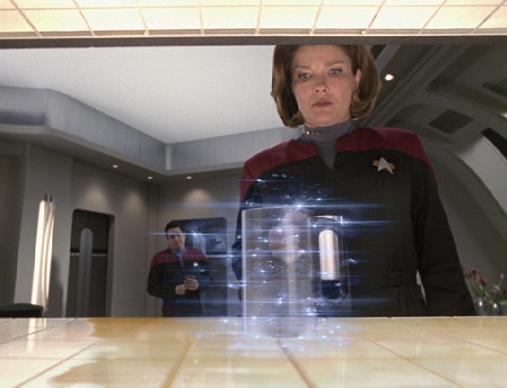
Scarcity is the most fundamental economic problem that societies face. In a world of unlimited wants and scarce resources, all individuals and societies are forced to choose among competing alternatives. Fortunately, technological advances have made our lives better by reducing the opportunity cost of some of these choices. Consider the time-saving inventions of the microwave oven, the automobile, the washing machine, etc. Will technology ever completely eliminate scarcity? For instance, the popular science fiction TV series Star Trek had a machine called a "replicator" that essentially produced things (such as food and clothing) out of thin air. Does this mean that Captain Kirk and Mr. Spock never have to face the tough choices imposed on us 21st century humans?
6 comments:
I don't think that even Captian Kirk and Mr. Spock are immune to the problems of scarcity, and other things that affect uys 21st century humans. Yes, they may be able to produce things out of seemingly thin air, but it's never explained how exactly the items are produced. No matter how you look at it, the items are being taken from somewhere, whether they're actually coming from a store on some close-by planet, or from the atoms and molecules in the air. You can't produce something from nothing; everything has its price.
Well, I didn't watch Star Trek much, but when I did everyone had the same cloths on. True they were at work, but I really don't remember seeing any other outfits on the show. I could be wrong. Anyway, if this machine just gave them cloths out of no where and they were all the same wouldn't they be loosing their individuality? Think about the microwave. Instead of mom making meat loaf from scratch with her own personal touch, she can just pop in some frezzer burnt blob that kinda tasts like meat loaf, but it's not the same. Does technology make us lose our individuality? I think so.
I agree that advanced technology helps us live better at a certain extent because it reduces opportunity cost of producing. For instant, before 1920s, there were no washing machines in the world and people cleanout their clothes by beating them on stones or using a scrub board. It was really time-consuming to wash the dirt away. When the first automatic washing machine was invented by the 1900 Corporation, a precursor of Whirlpool in the year of 1947, everybody would like to have one. However, the price of this new invention was pretty high so that only rich people could afford it. As we can see, the scarce resources were allocated between the rich and the poor. As technology develops, cost of producing washing machines decreases so that the supply curve shifts to the right. As a result, price of washing machine decreases and more people have enough money to buy one. However, there are still a number of people who are willing to buy one but cannot afford it. Here is my point: no matter how advanced technology is, scarcity exists and allocation problem is in the presence of everybody because of unlimited wants. Advanced technology makes more people enjoy better lives by reducing opportunity cost but will never completely eliminate scarcity.
There will always be scarcity problems even with advanced technology because of the inability to make something from seemingly nothing ((perhaps they just used material from the uniforms Shatner outgrew as seasons progressed). Kirk still had to deal with basic economic decisions even with the seemingly limitless supply of free gold shirts. In nearly every episode, the Enterprise would lose several Ensigns, which would cause them to have to recruit more people for the job of dying on an alien planet so Kirk, Spock, Bones, Scotty, and Chekov would survive. Recruits would have to weigh the marginal benefits and costs of working on the Enterprise, knowing full well they could be die in many gruesome ways.
Another example of scarcity was when someone brought Tribbles aboard the Enterprise. In this case, space became an issue as the Tribbles reproduced every few hours. The technology of warp speed travel made it possible for problems to arise that previously would not happen, which change the items that become scarce and introduce natural problems like Tribbles. Luckily, Kirk was able to send all the Tribbles off the ship and onto a nearby Klingon ship. Unfortunately, the Klingons were not as economically minded and they did not fare well because of it.
Perhaps the greatest example of having to weigh economic issues was the amount of power that had to be used by the Enterprise. It was impossible for them to engage their plasma shields and fire off photon torpedoes at the same time, so Kirk had to determine which option had the greatest marginal gain.
Finally, the concept of the prime directive, not interfering with an alien culture, is not very well founded. The nature of the universe is that things change and by interacting with alien cultures, trade of ideas and materials could commence and in fact inprove the standards of living for the two cultures. The example of the people worshiping their god could extend to a cultural and scientific revolution of the people just because Kirk and the Enterprise interacted with them and changed traditions. Overall, technology doesn't interfere with civilizations as much as it changes the wants and needs of one and places different values on goods.
Without knowledge exactly of how the replicator works, it's impossible to truly determine precisely the scarcity concerns of the crew of the Enterprise. Assuming that it is capable of making something out of only energy, undoubtedly that means that the Enterprise's only concern with material scarcity would be energy.
Scarcity problems in the "space age", you can bet their gonna be their. lets consider some facts about star trek, first they've settled just about every planet there is. with that said you now have access to the resources on all of those planets. I will say, beaming something out of thin air is pretty far fetched, but you have to admit that their amount of resoures would be much high than if you could only draw products form a single planet (say earth for example). this massive increase in resourses would put far less restraints on economy.
Post a Comment