Saturday, September 09, 2006

Safety Since 9/11

Ever since the attack on the World Trade Center on 9/11, America has a feeling of anxiety about terrorism. To try to erradicate this feeling of axiety the government has decided to launch a "war against terrorism," which is essentially the war which started in Afghanistan and is now in Iraq. The Government claims that this war is increasing our safety in America, but according to a Poll: Many Americans Feel Less Safe taken by CBS, more Americans feel less safe than they did five years ago. We all know the real reason of the war in Iraq; we want the oil. According to the poll many Americans believe that we've created more terrorists from the war. Even though 55% of Americans say that Bush is handling the war the right way, it's sharply decreased from 90% when the war started. When asked if we were prepared for another terrorist attack, almost half said that we are not, and when asked about a chemical attack, almost 80% said we are not prepared.

Even though the War in Iraq seems to be helping out the war on terror, it doesn't seem to be making Americans feel safer. Could it be that we're trading our feeling of security for oil?

Friday, September 08, 2006

The New Facebook Creeps Me Out

Earlier this week, on September 5th, the current most popular social-networking site added a new feature to their site. Facebook's new feature has been named "News Feed" and has an unusual demeanor to it. Users can now view any recent actions that their friends have performed. Although, even in a society that has been extremely open with their personal information, this new feature is not being very well accepted. Just a few short hours after the change in the site that receives up to 250 million hits a day, countless anti-News Feed groups were formed. I myself joined a group entitled "The New 'Stalker Version' of Facebook Creeps Me Out," and one group, "Students Against Facebook News Feed," already had more than half a million members by September 7th. But in the college world, I couldn't imagine not having Facebook. This is all stated in the story The Facebook Rebellion on CBSNews.com, but the main point of the story is the fact that students do have power in numbers. They are only hoping that sometime soon our generation will put our numbers into something important such as the war in Iraq or voting. But is our generation as involved with the government and society as we should be or do we need to rally our numbers to become more active? Is there a way that sites such as Facebook could help us to create involvement in society?

Cuba's Economic Fate Up in the Air

Fidel Castro is ailing after surgery, and the country is anticipating the rule of brother, Raul Castro. Anxious to see what occurs, people believe that Raul will change Cuba's economy, for the better, and he is open to some changes. The U.S. is eager for Cuba to welcome capitalism and economic reforms. Since the Cuban missle crisis, the relationship between the U.S and Cuba has been somewhat shaky. http://www.usatoday.com/money/world/2006-08-27-cuba-economy_x.htm. The U.S. has an embargo on Cuba limiting nearly all exports except those of agricultural and medicinal purposes. Cuba is ranked as one of the world's least-free nations.
More than half of the Cuban population lives in poverty, and it has also ran a heavy debt owing European nations forty billion dollars. Along with the people and money problems, the production of goods has fallen and only oil, gas, and nickel have seen growth. If Cuba and the U.S. make ties and the embargo is lifted, agricultural exports would grow drastically, helping the U.S. economy. The U.S.-Cuba Trade Association works on behalf of its U.S. business members to protect the current trade and to expand and increase the potential for future business between Cuba and the U.S.

So, imagine if we lifted the embargo and traded not only agricultural products, but also medicine. We could help poverty, we could save lives, and we could help their economy grow, as weel as our own economy.

Time Magazine: California's Global Warming Solution

Global warming is an issue that cannot be ignored on any level, and I found this article to be interesting because someone is finally doing something. Here is a state that is not letting the federal government decide what to do, and is taking the time to make it's own impact and lead the way for other states to follow. It is not surprising that most citizens in this country want to do something about global warming and other negative effects that we as a nation are having on the environment. But is anybody really doing anything? How are you changing your ways to help the environment? When it comes down to it, can we really change our ways or is it too late? This effects all of is economically and socially but what can we really do to reverse it?

Thursday, September 07, 2006

A Changing Climate

It is not secret that the earth’s climate is changing. And I am sure you have all heard more than enough about global warming and perhaps even some really crazy ideas on how to solve it. When I worked at a non-profit environmental group over the summer another group from Germany actually suggested to us that if we could get 2 million people to jump up and down at the same time on a certain day, we could throw the earth out of orbit and all global warming problems would be solved (right). Despite what you may have heard, climate changes are of real concern, especially for the U.S.

An article published in The Economist stated that, the United States is the world’s biggest producer of greenhouse gases currently, although it looks like China may surpass us soon.
The article goes on to say that developing nations feel that counties like the United States created emissions problems that are leading to negative climate changes and they should be the ones to fix these problems. However, as a country, we have done little to take control of emissions problem therefore it seems that if we don’t take action, many other countries won’t either.

Believe it or not, possible solutions that are being offered to solve emissions and global warming problems are economic ones. One solution would put a price on emitting harmful greenhouse gases. Or another option that economists like but environmentalist might grumble about, which is to have a carbon tax, allowing producers to emit and buy and sell emissions credits.
What do you think is the best way to solve these climate problems? What are your thoughts on emissions credits?

MLB Players Make Too Much Money?

Many hard working Americans were outraged when Alex Rodriguez signed a record contract that would give him 252 million dollars over 10 years. How can a grown man playing a kids game make over a quarter billion dollars while Americans working “normal jobs” make so little?

So it is a common response that most think professional athletes, particularly baseball players, make entirely too much money while teachers and other hard workers don’t make enough.

There is no doubt that 252 million dollars is a lot of money, more then anyone would ever need to live well. It is also only natural to want as much as you can get especially if the owner of the team you signed with is making even more money then that off of selling goods and tickets with your name attached to them. It is difficult to calculate how many people Alex Rodriguez puts in the seat day in and day out, and many hot dogs and pops those people purchase but there is no doubt the New York Yankees owner George Steinbrenner is making a pretty penny by having A-Rod on his team.

On jersey sales of $150 each it is clear that possibly the problem isn’t the players asking for too much money, but instead the owners trying to make too much money off these “cash cows” that put people in the stands.

Realtors Expect Home Prices to Fall

The cost of houses is expected to decline in the next few years. Although prices may remain the same or increase a bit, with inflation factored in, the cost of houses will still be less that what it is now in the next two years. People effected will include those who own their own home, those you are looking to buy or sell, and those that buy and sell homes quickly to turn a profit. The value of real estate typically rises, ther drop may have adverse effects on people in the market. Real Estate agencies may also see a difference in their business. Although prices may temporarily decrease, it does not seem to have any long term consequences for the market.

Essays for Money

I'm sure many of you have to write several essays each semester in fulfillment of the course requirements for your various classes. You may even look forward to writing a couple of them because they satisfy some intrinsic, scholarly, curiosity on your part. Well, what if you could also earn some money for the essays you write? (And I'm not talking about selling your essay to some desperate underclassman.) If you have the inkling, check out the following essay contest sponsored by the Institue for Humane Studies at George Mason University.

  • aBetterEarth.org is sponsoring a contest on the topic "Endangered Species Act has failed not because it isn’t strong enough, expansive enough, or funded enough, but because its incentives are wrong."
  • aWorldConnected.org typically sponsors a contest on the topic of Globalization.
  • iLiberty.org typically sponsors a contest on the topic of Civil Liberties.
Prize money for each of the above contests are typically:

1st prize: $2000
2nd prize: $1250
3rd prize: $750
Honorable mentions (4): $250
Authors of the top 50 essays will receive a free book.

If anyone is interested in pursuing any of the contests, just check out the above websites for the details. I'd be happy to proof read any of your essays if you're interested.

If anyone is aware of any other essay contests, please add relevant links to the Comments section of this post.

Wednesday, September 06, 2006

Pushing nicotine - September 1, 2006

Do you ever wonder why cigarette companies receive so many customers? Particularly in some states where packs are priced over six dollars. Well, ten years ago Clinton's Food and Drug organization attempted to control tobacco as a vastly addictive substance. The Supreme Court denied it because Congress didn't give power to regulate it. The following may give congress a reason to start changing their minds. A state Department of Public Health made studies that showed that tobacco companies amplified levels of nicotine in many cigarette companies by an average of ten percent between 1998 and 2004. Silently raising nicotine levels at a period when states were outlawing smoking in public places and raising tobacco dues has helped the industry to continue a steady twenty percent or possibly even extra adult Americans hooked as customers. One of three states to actually trail the contents that are in cigarettes is Massachusetts. Nicotine levels rose in 92 of 116 cigarette brands, according to the DPH study. In twelve brands nicotine stayed constant, and in twelve it fell. This study came out a little more than a week following a federal judge lined that the industry had steadily deceived the public about the risk of its products. Mike DeWine of Ohio would have given the FDA the power to control tobacco but not ban it completely. The DPH statistics make it apparent that, lacking an agency like the FDA riding pack on it, the industry will do anything it can to keep smokers addicted. Congress should put an American life before this authoritative lobby and order the FDA to regulate tobacco.

Hurricane season a safer bet for travelers

“When a major storm hits the Caribbean, most airlines and hotels eventually wind up waiving the usual restrictions so that customers can change or cancel their plans free of charge. But because policies have traditionally been announced on a case-by-case basis -- and at the last minute -- you had little choice but to wait and cross your fingers. Now, after two brutal hurricane seasons, a few airlines and tour operators have taken steps to ease travelers' concerns.”

According to CNN, some airlines and agents have allowed that customers can make changes for free once the National Hurricane Center (NHC) declares a hurricane watch or warning. In addition, a few tour operators have improved their travel-insurance policies, such as a free replacement vacation if a hurricane interrupts your trip.

Nevertheless, the question is that will this action really lead to an increase in business? Will people still want to travel in a hurricane season? How many people will take the risk of a hurricane to travel? But anyway, I think this policy was not bad after all.

Tuesday, September 05, 2006

Are You Ready For Some Football?

As the pro football season fastly approaches, many fantasy football leagues are being started. This includes people in business firms.

Employers and now preparing for a potential decrease in productivity of their employees. Creating a fantasy league in the office takes up alot of time that employees should be using to work. Checking team stats, trading players, and chatting takes up time each day. Fantasy leagues may also pose legal risks for employees. Employers can face lawsuits claiming bias if office leagues exclude some workers, such as women.

However, fantasy sports can be a good thing for the office. Employees compete each week and build camaraderie between their co-workers. Some companies can even make connections with other clients.

Michael Henby, author of Fantasy Kick, a book about leveraging fantasy football in the office to provide a career boost, said, "It's like the new version of golf," he says. "Why do people want to play golf with the boss? So they can get good face time. Fantasy football allows you to be with a group of people from different departments."

Money Ball

I am a huge sports fan, and my sport of choice is baseball. I wanted to find out if team salaries translated into winning championships. Next I found a website on baseball economics 101. At that site I noticed that the player info was a little outdated, but the point is the same. Today if you look at the contract of Alex Rodriguez (A-Rod) you would notice that he has a salary reaching a quarter of a billion dollars! Alex Rodriguez makes more money than the Florida Marlins. Now that is an interesting piece of information. One not close to the game of baseball would probally expect the Marlins to be in last place, but that is not the truth, the Marlins are one game over .500 and only a couple games out of the wild card. They are also the hottest team in the league. Teams in the past have won with low salaries like the Oakland A's, Minnesota Twins, and the Florida Marlins. And on the other end of the spectrum there are teams with high salaries that are underachiving like the Giants, Cubs, and Red Socks. Year in and year out the Yankees are in the playoffs, but they have not won in several years. I think it takes more than just abunch of high paid athletes to have a winning team. Sometimes you need the guy that will stick his nose out there for the bettering of the team. If you don't believe me just look at the recent loss of Team USA to the Greek squad who didn't have any NBA stars on their roster.

9/11 Movies Maybe A Little too Early

September 11, 2001 was the most tragic event in our nation's recent history. Just like the bombing of Pearl Harbor it caught the nation by surprise; just like JFK's murder, everyone will remember where they were when it happened. People have been mourning the losses from that day for 5 years coming this September 11, but it seems that film makers have just found another tragedy to turn into big bucks. With 2 9/11 movies already into theatres and a made for TV movie ready to air on ABC, it makes someone wonder, is this a little too much for only 5 years after the actual event took place? According to Fox News, the producers of "World Trade Center", the movie that has just been released, have donated 1.3 million dollars to the building of the 9/11 memorial. That may seem like a huge amount of money, but when looking at the grand scheme of things, that's only about 2% of their gross (50 million) from the movie. Dyson and Baudo have put more money than that into Marietta College. Another movie, "United 93" has been released to DVD after being shown in theatres. This movie depicts the actual events on one of the planes from 9/11. It may just be me, but it's a little early for these movies to come out. I'm sure movie producers could have waited another 5 years. Going to the movie theatre to relive the horror of 9/11 this soon just doesn't interest me. I think that when the producers were thinking of making this movie they should have thought more about the pain people have felt from this tragedy instead of trying to roll over a profit.

Do you really know the status of your partner?

Homosexuality has been linked to AIDS for as long as AIDS has been linked to African-Americans. The virus is increasing in the African-American community. According to a research done in five major US cities, 46% of African-American men who had sexual intercourse with other men were found with the virus (HIV). African-American women are also affected by the virus. African-American men who are homosexual are scared to come out of the closet due to the antigay bias and are therefore pressure into sleeping with females.

At their annual AIDS meeting, the national black leaders of NAACP decided to take a new approach on the issue. This new plan is not to only target AIDS, but to deal with other issues that are associated with the disease, for example homosexuality, sex behind jail walls, and drug use. At the conference, the leaders talked about AIDS being a “black disease”, but few blacks disagreed with that idea or mentality. Cathy Cohen, a African Americana professor, at the University of Chicago, has been studying the effects of AIDS in the black community. According to Cohen, the stigma that AIDS is only a black disease, gives more fault to politicians and government officials to blame African-Americans for the disease. There hasbeen more medical facilities lately to help accomodate those who live with the disease. AIDS is not just a disease geared towards a specific race so it should be looked at as a world wide issue. AIDS should be treated as any other chronic disease like cancer. Many people tend to sweep the topic under the rug and not face the facts. Last year, Hip-Hop artist Kayne West would break that silence and bring about a change in the community. He touched on a subject that many tried to avoid. Through his efforts, he helped educate and save thousands of peoples lives.

Keeping things in prospective, we have to ask ourselves, what is really important? Is it legal to keep such vital information from someone? I think that the government should consider some type of legislation. Something that states it is illegal to keep your diagnosis from someone if he or she asks. It should also be illegal to keep your status from someone if you know you are HIV positive or have contracted the disease regardless if he or she asks. Just as measures were taken for alcohol, drug and tobacco prohibition, certain measures should be taken to prevent the spread of AIDS through ignorance.

Monday, September 04, 2006

Say Good-bye to the SAT?

According to the New York Times, one-fourth of U.S. News & World Report's Top 100 small liberal arts colleges have made entrance exams, such as the SAT, an optional choice for perspective students. Liberal arts colleges have found that there is an increase in the size and diversity of the incoming students. With no required admission exam, students from low-income families and students from non-English speaking families have equal opportunity to receive higher education, as opposed to students from wealthier families who can afford extensive tutoring prior to the exam. The optional exams also represent the commitment of liberal arts colleges to consider each student based on the potential of everyone regardless of the results of these tests. Therefore, the reputation of small colleges increases, because of the willingness to evaluate the whole person instead of one element of a student's ability.

As admitted college students, we were, at one point, compared to other perspective students for admission. Were we admitted or not admitted to a particular school based on defined test scores or on the quality of our academic/extra curricular activities? Is this a positive or normative analysis? Do the SAT and other admission exams represent the quality of a student? And if there were no entrance exams, how would admission counselors' evaluate the potential success of two students? What are small liberal arts colleges giving up when they make admission exams an option?

A Big Star May Not a Profitable Movie Make

Movie industry executives may be forgiven for thinking that the Viacom chairman was mad to let Tom Cruise go after a 14-year relationship simply because Mr. Cruise seemed a little off balance. Yet, if you ask economists and other academics that study the movie industry, Mr. Redstone’s decision was, in financial terms, spot on. No one really knows what was going through Mr. Redstone’s head, but one can’t discard that the reason is that it doesn’t make economic sense to pay him all this money. “There is no statistical correlation between stars and success,” said S. Abraham Ravid, a professor of economics and finance at Rutgers University, who, in a 1999 study of almost 200 films released between 1991 and 1993, found that once one considered other factors influencing the success of a film, a star had no impact on its rate of return.

In fact, there is a whole branch of economics that aims to explain how talented people generate so much more money than competitors who are only slightly less good. This idea is know as “superstar economics.” Superstar economics states that improvements in technology would make it easier for top performers in a field to serve a larger market. This would not only increase the revenue generated by stars, but would also reduce the revenue available to everybody else.

On average, movies that have big names starring in them make more money at the box office than movies that do not. Movie industry specialists argue that, in the complicated world of Hollywood economics, stars bring many different kinds of benefits. They are easier to market, they help sell more tickets at home and overseas and they help drive home-video sales, which are a bigger and bigger slice of studio revenue. Moreover, even if a star-studded movie does well, it does not necessarily mean that the stars are causing higher ticket sales. In fact, it seems to move the other way around: stars select what they believe are promising projects. And studios prefer to put stars in movies that they expect to be a success.

What do you think? Are superstars the reason for Hollywood’s success? Maybe the combination of a promising project and a superstar is the reason for fame.

How do people like bankruptcy?

How much do you know about bankruptcy? Do you have or have you had any of the misconceptions listed below?

1. Everyone will know I've filed for bankruptcy.
2. All debts are wiped out in Chapter 7 bankruptcy.
3. I'll lose everything I have.
4. I'll never get credit again.
5. If you're married, both spouses have to file for bankruptcy.
6. It's really hard to file for bankruptcy.
7. Only deadbeats file for bankruptcy.
8. I don't want to include certain creditors in my filing because otherwise I can never pay them what I owe.
9. Filing for bankruptcy will improve my credit rating because all those debts will be gone.
10. You can't get rid of back taxes through bankruptcy.
11. You can only file for bankruptcy once.
12. I can max out all my credit cards, file for bankruptcy and never pay for the things I bought.
There is a kind of people who fear of bankruptcy. To them, vanity is much more important. They don’t want others to know they are filed bankruptcy, maybe because it is a symbol of “failure”. But actually, bankruptcy is a common economic means to get a lot of people out of trouble if they simply choose this way at a proper time. And some people do not choose to announce bankruptcy merely because they think bankruptcy will take away all the things they have had. However, according to the article, we know it will not cost you anything more to bankrupt, since bankruptcy itself is to help people get out of the trouble of debt with some of your mortgage. Considering some personal relationship, some people who decide to bankrupt do not have to worry about there would be no chance to repay their creditors.

On the contrary, another kind of people abuse bankruptcy. Before certain law was set up, some people take bankruptcy as their income by maxing out their cards or something. But as the law become increasingly precise, it is getting harder for people to bankrupt infinitely to lead their lives. However, the law is still not enough to prevent some people abuse bankruptcy. Can you think out any other suggestion to ameliorate the law?

Sunday, September 03, 2006

Raise Minimum Wage?

Today's society is full of expenses. These expenses include things necessary for living such as food, clothing, and house payments. They also include things that aren't exactly necessary for living, but are nice to have such as a telephone, television, or a computer.

The fact is that all prices are constantly going up. Food, gas prices, electric bills, and phone and cable services seem to increase every year. Household appliances are also always going up in price because of new features the appliance is capable of doing.

People who are uneducated and just work minimum wage jobs can barely afford the things they need to live on. Costs of living are always going up, yet minimum wage is always the same. As shown on a minimum wage history graph at http://oregonstate.edu/instruct/anth484/minwage.html, minimum wage hasn't changed since 1997. This is the longest stretch with no change in the US minimum wage history.

In order for people to be able to have the necessary things to live on, minimum wage needs to be increased. Prices are just getting too high for some people to have a healthy lifestyle.

US construction spending tumbled in July

According to the article of “Construction Spending Tumbles” published on CNNMoney.com, after seasonally adjustment, the US construction spending fell to an annual $1.2 trillion rate in July, which was the steepest decline since August 2001. This much greater-than-expected decrease was combined by a 2 percent decrease in private residential construction and a 0.3 percent increase of private nonresidential construction.
As we know, house holds buy new houses as part of the investment, and the quantity of investment goods demanded depends on the interest rate, which measures the cost of the funds used to finance investment. If the interest rate rises, fewer investment projects are profitable, and the quantity of investment goods demanded falls, which is shown in the downward-slope investment function. In our case, there was an upward trend in interest rates curtailing US home sales and building. However, the big decrease still caught analysts’ attention because they predicted that the construction spending could decrease by 0.1 percent while in the real world, it went down by 1.2 percent.
Were there any other reasons that caused the construction spending, which was part of the investment, other than the increase in interest rates?

Friday, September 01, 2006

Warning: Warnings are getting out of control!

WARNING: Do not read this newspaper while driving a motor vehicle, operating machinery or piloting an aircraft. Do not read newspaper over an open flame. Do not hold newspaper close to face while smoking a cigar. Do not use newspaper as a flotation device. Newspaper may be harmful if taken internally. Reading newspaper articles may cause irritation, nausea, drowsiness, uncontrollable laughter, weeping, cynicism, confusion, depression or existential despair. Keep out of reach of children.

Warning lables are everywhere! Most commonly they are on cigarette packs to warn that they are unhealthy, that hot coffee is actually hot, and medicine labels list various side effects that may occur. However, now they are even being found on dog leashes, rented movies, and biology textbooks.

In the United States, some warning lables are required by federal or state law, while others are voluntarily displayed on the product in order to prevent a lawsuit. In 1973, Congress voted to require labels on products containing toxic substances. The law created three levels of warnings: "Caution", "Warning", and "Danger!" Today's era is the era of warning, so consider yourself warned.

Some extreme warnings that are actually true:
Baby stroller - Remove child before folding
Heat Gun - Do not use as a hair dryer
Kitchen knife - Never try to catch a falling knife
Cocktail napkin decorated with a map of Hilton Head, S.C., - Not to be used for navigation
Bottle of dried bobact urine (for insect control) - Not for human consumption
Dr. Scholl's socks - Please be cautious as socks can be slippery when walking without shoes
Toilet brush - Do not use for personal hygiene

More of these true but strange warnings can be found in Dorigo Jones' forthcoming book "Remove A Child Before Folding: The 101 Stupidest, Silliest, and Wackiest Warning Labels Ever." You can check out more on this topic at this website http://www.mlaw.org/wwl/index.html.


Is America overprotective? Are warning labels a "safe bet" for businesses in order to protect them from lawsuits?

Yahoo: Now Hiring Economists

The Wall Street Journal notes that Yahoo has recently hired a team of economists and other researchers to stimulate research into ways of turning data mining into more revenue. For economists, this is an opportunity to test a variety of theories that they've been working on in their ivory towers.

Until now, university economists typically have had to rely on limited sets of historical data to test their theories. At Yahoo, they can tweak market conditions and watch what happens to the company's roughly 500 million monthly visitors.

Economic theory can be applied in a variety of settings. For instance, consider Yahoo's online dating site, Yahoo Personals. In 2001, Yahoo started charging users for the service and actually saw membership increase as a result. [Ordinarily economists would expect higher prices to decrease consumption. Why, in this case, do you think a fee led to an increase in use?]

One of the academics hired by Yahoo is Cal-Berkeley microeconomist Michael Scharwz, whose recent research includes a paper titled "Synchronization Under Uncertainty." Dr. Scharwz's research has clear implications for online dating:
These days, Mr. Schwarz is thinking about how to use economics to save attractive women from unwanted solicitations on an Internet dating site. One idea employs the concept of "scarcity," rationing the number of free messages each lothario can send. Another uses full disclosure, by displaying how many people a suitor has already approached.
The battle for internet supremacy may have more to do with economists than computer programmers.

Thursday, August 31, 2006

The FairTax

Have you heard of the FairTax? It’s a tax system that is being proposed in congress that would replace the federal income tax and payroll taxes, including gift, estate, capital gains, Social Security/Medicare, and corporate taxes. The FairTax is based on a national retail sales tax. So the more items your buy, the more you are taxed. I’ve stated a few of the main points of the FairTax below:

- Americans take home 100% of their paychecks
- No federal sales tax up to poverty level
- Monthly rebate to account for necessities
- No tax on used goods. Amount paid to fund government is totally visible.
- Retail prices wouldn’t hide corporate taxes or their compliance costs
- The income tax exports our jobs, rather than our products
- The FairTax is revenue neutrality: Neither raise nor lower taxes so consumer costs remain stable


More detailed information on these topics can be found at http://www.fairtaxvolunteer.org/smart/FairTaxFAQ.pdf or for a more general view of the tax system, go to http://fairtax.org/.

I think the FairTax system would be great. The tax system as it stands now is large and cumbersome. I find this topic very interesting and would like to hear people’s opinions. Would it work? Could we see more jobs come back to the US? How would the political scene change if this system were used?

Birds May Travel, but Will You?

The bird flu has been discussed in the news for several months now. Both the World Health Organization and the Center for Disease Control in Atlanta say that traveling to countries that are known to be infected with the bird flu disease in both humans and poultry, will not be restricted at this point in time.
It has been said that the Avian Flu will arrive in North America sometime this year, 2006. This will result in a pandemic where scientists have mentioned an estimated 30% of the population will become infected and very ill. As you know, health care in America is already a mess and for all we know it will be up to us to help ourselves when this flu strikes.
When it comes to travel, for business or pleasure, people have the choice to fly and/or take a cruise, but because of this new bird flu scare, will people all over the world stop traveling? Think about the Caribbean Islands, villagers thrive off of tourism. If they do choose to stop traveling due to the fear of becoming infected by this flu, will economies deplete, sending airlines and cruise lines out of business? How about Disney World, the main tourist attraction in America, will it run out of business?

Tuesday, August 29, 2006

New York Women See 2 Sides of Prescription-Free Morning-After Pill

According to the New York Times, the morning - after pill or Plan B has now become available to buy it at any pharmacy without a prescription for women 18 and older. Making this pill simple to get has some women breathing a little easier, while other are worried that this might increase sexual behavior. Women now have the choice of taking a pill that can lower the risk of pregnancy by up to 89 percent. Plan B does not protect against sexually transmitted diseases or HIV. Barr Pharmaceutical Company has said it hopes to begin nonprescription sales of Plan B by the end of the year. The pills will be sold only from behind the counter at pharmacies, but not at convenience stores or gas stations. There isn't enough scientific evidence that young teens can safely use Plan B without a doctor's supervision, but Barr did prove that over-the-counter use is safe for older teens and adults. The morning after pill has been available by prescription since 1999 with many people having to pay around $300 for a visit to their local doctor in order to get the drug. Now the Barr Pharmaceutical Company, the maker of Plan B, has made the pill available to women at $20 to $40 a pack. Is it in a woman’s self interest to take the pill? Are there more unintended effects of taking the pill than just the possibility in the amount of sexual activity?

Schering-Plough to Pay $435 Million in Probe

Forbes.com reported today that pharmaceutical giant Schering-Plough, the maker of Claritin agreed to pay $435 million (talk about sunk costs!) and plead guilty to conspiracy to settle a federal investigation. The corporation has been charged with overcharging Medicaid for drugs as well as marketing them for unapproved uses.

Previously, Schering-Plough paid $346 million to settle charges that it paid bribed an insurance company in order to protect the market for its product, Claritin. Other charges and allegations that the company has been faced with include:

· 2 separate accounts of selling different cancer-fighting drugs for uses which had not been approved by the FDA.
· The sales department determining which doctors received grants to run continuing medical education programs (presumably based on which physicians used their products).
· Providing false data to the government’s Health Care Finance Association about the price of Claritin Redi Tabs © to secure that HMO’s business, as well as attempting to supply them with free drugs.

Part of the settlement includes a stipulation that the company adds a section to their corporate integrity agreement with the Office of the Inspector General of the U.S. Department of Health and Human Services, which will require Schering-Plough to monitor their marketing and drug pricing in the future, as well as make amends for their past manipulations.

Incidentally, Schering-Plough has 32,000 employees worldwide and makes approximately 9.5 Billion dollars annually. After the settlement was made known, their stock rose 41 cents (2 percent) on the New York Stock Exchange.

Should the government be allowed to interfere to this degree in a free market economy, if the general public is not aware of a corporation’s abuse of its position? Would this be possible in a laissez-faire system? Are the penalties they impose even effective, if a corporation is as wealthy as this one? What if the cancer fighting drugs really do save lives- does the FDA have the right to deny patients’ a chance to survive? Does this take away individual choice? And, perhaps most importantly, is it coincidence that after being charged with a lawsuit, the companies stock prices jumped? What does this say about the American economy?

Sunday, August 27, 2006

English Only Town: A Good Idea?

I was doing homework while listening to the news last week when something caught my attention. A New Jersey town is considering making the town an English only town (English would be town's official language). The question of YES or NO will be put to voters come election time in November. The mayor seems to be in full support of the idea saying it would "unify the town." If this is passed it would require all businesses to conduct all business in English unless otherwise required by State of Federal Law.

This could have several repercussions, but one concern is the definite economic trouble it could cause the city. If part of the population does not speak/read English, then they will either relocate, or at least take their business elsewhere. Either way, it could cause economic problems for the city. What do you think the best course of action is? Would you vote yes or no?

Friday, August 25, 2006

fuel costs weigh on consumers

Gas prices are still on the rise and home values are decreasing, so should it be any surprise that our economy is in a slump? With the gas prices taking such a high toll people are focusing more on necessities and are spending less on impulse buys. Applebee’s is even suffering from the gas prices because people are less willing to spend money on dining out and are opting for the less expensive meals at McDonald’s. The purchases of many expensive items are being avoided like new cars, vacations, and even remodeling the house. Many Americans are changing there complete lifestyles from the route they took to work to weekend plans . It is difficult for Americans to have to make such difficult tradeoffs between things they want and things they need.The slump says a lot when even Wal-mart is seeing a decline in profits.
How much longer are we going to be in a slump? What other unintended consequences will arise due to high gas prices?

Thursday, August 24, 2006

America's Drunkest Cities

Forbes.com reports on the "drunkeness" rankings of 35 metropolitan areas within the United States. Rankings were based on state laws, number of drinkers, number of heavy drinkers, number of binge drinkers, and the extent of alcoholism.

The top five cities are:

1. Milwaukee
2. Minneapolis-St. Paul
3. Columbus, OH
4. Boston
5. Austin, TX

Hmmm...is this something that Milwaukee can be proud of? (Should Columbus be worried that it is only ranked #3? After all, Columbus has a reputation to uphold now that OSU's football team is the preseason #1 ranked team in country.)

How much weight do you give to such rankings? Take a look at the methodology behind the rankings and suggest an alternative system if you're not satisfied with the approach of Forbes.com.

Thanks to Division of Labour for the tip.

Wednesday, August 23, 2006

Waiting for Starbucks

Since Hurricane Katrina, New Orleans has been in the dumps, literally. Businesses are slowly moving in, even though many of the people who lived there before, have all moved back in. Because of this, many people wonder if they will have the jobs to support their families. According to CNN.com "Waiting for Starbucks", in order to deal with this problem, the city is allowing the local businesses to open first, and the national businesses later. Starbucks for instance, only has two of their four stores open, and Popeyes has sixteen of their thirty-six stores open. With the exception of Wal-Mart, which has eight of its ten stores open, many nation-wide companies have not moved back in. Cooperate America is afraid to move back in because they fear a lack of employees and also consumers. Lack of housing and cost of housing has caused more problems in staffing because many people cannot afford to move back in, in order to take their old jobs back. Plans to sell four of the five city hospitals have been broughten up because the city cannot afford to keep them all. Because of the shortage of workers and worker housing, the number of jobs in education and health is down 42%. Jobs in hospitality are down by 35% and in trade and transportation, down 28%. Yet, with all these jobs “open”, many relocated New Orleanians are still in search for jobs. In fact, one out of every four is unemployed. But, the national companies are doing their best to help. Wal-Mart tracked down every evacuated employee and their family members to tell them they could have a job at any Wal-Mart they could get to. Popeyes has gone to such lengths as to ask FEMA for trailers as a way of housing families, so they could have housing and a job. FEMA said they could only give them to teenagers, not their employees. Robert Pollin, an economist at the University of Massachusetts Political Economy Research Institute, says to tell employers to buy their own trailors in order to house the families, and then submit the bills. James Boyce, one of Pollin's UMass colleagues, agrees: "The record shows that business will respond if asked to do something that makes sense, is within its sphere of competence, and isn't financially suicidal. There's a lot of good will in this country's business sector, but it needs to be called on."

What do you think? Should local businesses buy their own trailers in order to house their employers? Do you think it would be worth it? Should the State, or FEMA for that matter, be more willing to help?

...Will that be smoking or non-smoking?

A brouhaha recently occurred in Ohio as part of the political tactics involved in the anti-smoking campaign to ban smoking from all indoor public places in the state. The group SmokeFreeOhio is pushing for a November ballot issue that would increase regulations on second-hand smoke exposure by banning all indoor smoking in public places within Ohio. Meanwhile, SmokeLessOhio is pushing an alternative ballot issue that would also limit indoor smoking but would allow some exceptions such as bars and restaurants.

Over in Europe, Scotland implemented the more stringent version of the smoking ban back in March of this year and the early evidence suggests that pub owners are now feeling the pain. According to an industry group, drink sales are down 10% since the ban. Pubs also report fewer visitors and reduced meal sales. Some even claim they could go out of business if business stays flat.

This raises an interesting tradeoff from society's point-of-view: what price are we (society) willing to pay for increased health? Are we willing to sacrifice bar and restaurant jobs for increased health? How many jobs? How much better health?

Monday, July 31, 2006

Pay More For Your Food

With each passing year the number farms is decreasing rapidly. The government wants to keep food at a cheap and resonable price. This causes farmers to lose money because the governemnt tries to control the cost of food. Many farmers end up having to pay more to produce the food than they actually make. This puts many farmers out of business. Also our environment is being depleated. The government had also driven us to buy processed foods with are not from the farmers and there for take away more revenue from them. The US only spends 11% of their income on food while other countries spend up to %20 for their food. The government has put policies into place but the hidden cost is the damage to the environment.
One idea was to buy food directly from the farmers. Farmers then know their demand prior to the season. For example, buyers will order the amount of chickens that they want for the upcoming year and then the chickens will be delivered directly to them. The down side to this is how many people know how to kill the chicken and then make it into editable food or how many people actually want to do that. There is a problem but is buying direct from the farmers the way to fix it?

Security and Oil

The US Energy Secretary wants Iraq to open it's oil sector. The US wants to help Iraq recognize the potential gain in doing so. The country would be able to bring in large benefits if they would begin to open up trade in oil. The US wants to help Iraq gain $20 billion in investments to increase it's production. Recently Iraq has lost more than $11 billion due to terrorists attacks and theft. Iraq feels that it needs protection before it can produce more oil. The US wants other countries to help out with security and investments. Maybe the US should not involve other countries and make the investments themselves. Our oil prices are high enough. We are currently giving Iraq protection so we should open up more trade with Iraq ourselves. With more oil our gas prices should go down.
Our troops are the ones that have been over in Iraq for 5 years. Why does the government want to help other countries get more oil. Our country needs the oil. I don't see why the government wants to almost give the oil to other countries when we are the country that have been fighting over there.

Japan Opens Trade

After 3 years Japan decides to re-open trade with the US on beef. In 2003 Japan stopped trade with the US because of reports of mad cow disease. Japan lifted the ban because our government allowed Japan officials to examine US packing plants. In 2003 alone Japan bought $1.4 billion worth of beef. It could be estimate that the US lost $4.2 billion in the past 3 years from not having Japan as a market. I wonder if the US will have the supply needed to ship to Japan. I would think that some of the smaller beef factories would have had to been shut down because our demand went down by so much. I believe that this is still a great benefit to the US.

Sunday, July 30, 2006

Minimum Wage

The House voted today to the raise the minimum wage over a three year span to raise the minimum wage to $7.25 an hour. A serious issue for many Americans has become a circus show in Washington between Republicans and Democrats. Nobody can deny that the minimum wage of today is worth more than the inflation adjusted minimum wage of 30 years ago. In fact when adjusted to inflation, today's minimum wage is 30% lower than their counter parts in 1976.

For the Americans who make minimum wage this would be the first pay increase in almost a decade. A family can not reach above the poverty line if a worker only makes the current $5.15 an hour. With rising energy costs and inflation, we need a new system in place to calculate the minimum wage on a year to year basis. The states of Washington and Oregon index their wages to inflation, why can the national government not use this system as well? Also if minimum wage rises will this also mean the price for goods skyrocket?

Second Source: http://www.epinet.org/content.cfm/issueguides_minwage_minwagefaq

Saturday, July 29, 2006

Report: US Airways CEO asked Delta about merger

US Airways CEO wanted to merge with Delta Airways after Delta filed for bankruptcy. Delta decided not to merge with US because they have decided to exit bankruptcy court next spring and become a stand alone company again. If this would have went through Delta could have possibly started to have some price discrimination because they could have more of the routes in the United States after they merged. Delta could have also started merging with more and more airlines until the government would have to step in and break Delta up into multiple companies, just like they have done to other monopolies in the past. How big would Delta have to get before they broke them up?

Thursday, July 27, 2006

Free music can actually cost millions

After reading this article it goes to show that you could be part of a black market and not even realize it. In chapter 20 we learned about things such as public and private goods. Well the music and entertainment business provide a variety of rivate goods to consumers such as cd's and movies. But you always have those people that want a free ride and thus file sharing programs were invented. These enable you to download music and movies for free. This is actually illegal making it a black market. My question is what do you think they will do in the future to cut out all filesharing and piracy? Do you think that it will be around forever?

Tuesday, July 25, 2006

Older Parents - New Trend

It has been a growing trend since 2003; women in their 40's are now having children and then having to deal with the consequences later on. It is not uncommon for older parents to have children in their late teens to early twenties and then decide to have more children. There is just one major concern that these families have to deal with, which is retirement overlapping with parenting. Many parents are finding that they are able to retire when their children are still young and in elementary, but then they have the worry that their family will not be able to enjoy the same lifestyle if they retire. One incentive of working for a good portion of your life is that once you get approximately 30 years in, you are able to retire. This is not the case for such families who have to then put their children through college. The attached article gives suggestions on what to do if you are in this situation, with the most important thing being that you have to realize that you may not be able to retire at the age you were expecting. This is not saying that you have to work the rest of your life, but even an extra year or two will help a tremendous amount. The income you make in those couple years will help stabilize your family for the years to come and help you stay financially stable in the economy today. Another worry of older parents is the greater chance that something may happen to them while their children are still young. With all of these concerns of older parents, what are your feeling toward having kids at an older age? Is is financially a smart decision and would you be willing to risk your stability in our economy?

Grading Policies in the Classroom

One of the most basic principles of economics is that people respond to incentives. Consider the following situation: Suppose there are two classes made up of very similar students and students can choose which class they sign up for. In one class, each student receives the grade made on each test. In the other class, each student receives the class average as his or her grade. These policies are known by all. In what class would you expect the higher average grade? Explain your answer in terms of the economic concepts you read about in Chapter 20.

Monday, July 24, 2006

On the Pricing of Internet Service at Hotels


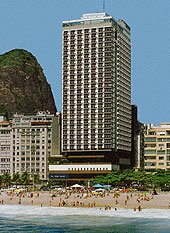
On my recent trip to Brazil my family and I stayed at a high-end hotel while visiting Rio de Janiero's famed Copacabana beach (see picture). The room was very nice and the hotel provided several amenities free of charge, such as access to a rooftop swimming pool. However, I was a bit peeved that the hotel charged for another amenity that I usually take for granted when staying at a hotel: internet access. The hotel charged roughly $10 per hour of internet access. When I stayed at a Best Western hotel in Bowling Green, internet access was free of charge. What's going on here? Can you use the tools introduced in the monopoly chapter to explain the difference in pricing of internet services between luxury and cut-rate hotels?

Friday, July 21, 2006

monopoly

Since we begin to learn Chapter 14 monopoly, it reminds me a phenomenon I saw when I visited Disneyland. I wanted to buy some presents as souvenir to my friends from Disneyland, but what I bought such as key chains, rings, and earrings were all made in China. As the matter of fact, these kinds of small merchandises could be very cheap in China. However, nowhere else is selling them except Disneyland. The two disadvantages I felt about this were that we have to spend more money to buy the same thing which is actually cheap and we can not find them in any other places. The positive aspect for the market is that consumers still buy them with more unnecessary money due to the symbol of Disneyland. What do you think about this phenomenon? Does it good for the development of economy?

HIRING

Since I am doing an intern of one month in BMW Brilliance Automotive Ltd, which is a joint venture established between BMW group and Brilliance China Automotive Holdings, I find out that almost one fifth of nearly 200 employees are interns. The wage of an official employee is more than five times as an intern. According to that, I am thinking that if the company expects to save their expenditure to hire many interns. My mission is just finish whatever they send me to do, such as typing, copy, packing up documents, apply payment form and render account. But I am available most of the time and not knowing what to do. During the chat with other interns, I realize that other interns face to the same question as me. In that case, if hiring an official employee who owns more professional knowledge and be able to do more major stuff is better than hiring many interns who can just do some trivia. Another totally opposite phenomenon in this company is that just two lawyers are in legal department in Beijing office. They undertake the whole thing of law and are always overtime to eight or nine o’clock. Their wages are obviously much higher than us, but I feel that that is an effective way instead. Considering of the benefit of economy of a company, which way is better? Hiring less people who are more professional or hiring many interns who do not have many work to do?

Wednesday, July 12, 2006

HD-DVD versus BD-DVD (the war at home)

People do not want to spend so much money on a kind of DVD players which will be antique several years later. However, both Blu-ray and HD-DVD arrived in stores this summer. Blu-ray discs will not play in HD-DVD players and vice versa. How do the consumers choose what type of DVD players they use or whether or not they are going to switch their old one became big issues. In my own opinion, even though inventing new productions will perhaps costs more than update, the manufacturers can gain more, considering of the long run because people do not like purchasing the same thing twice. My question is why do the producers update DVD instead of invent high technical productions.

Tuesday, July 11, 2006

Where is the crude going?

Even with high oil prices the demand growth for gasoline continues to rise. The second largest oil consumer China has seen a much larger demand growth in recent times than the United States. China is consuming a growth of 500,000 barrels a day of crude, while the United States is consuming a growth of 200,000 barrels.

So where is all of this oil going? Chinese consumers have seen a fifty percent raise in automobile sales in the first half of this year. Other developing countries are also demanding more oil. The demand of oil is increasing at a more rapid rate than the supply of oil. Disregard the notion that the supply of oil has decreased. We still have not reached the peak production of oil, and I believe we will not reach this peak until the end of our lifetimes.

Even with the demand of gasoline being high, the inflation rate for gasoline prices is almost right on track. The inflation adjusted rate of 1980 has the price of gasoline to be at $3.18 a gallon. The real national average is close to $3.00. If you ever get bored do a price comparison of gallons of gasoline compares to the beverages in the grocery store. You might find it surprising to see that gasoline is cheaper.

Monday, July 10, 2006

Charged for stealing Coca Cola secrets

It's all about the competition! Pepsi and Coke have been a huge rival since the beginning but never did anyone think it would come down to stealing files for one another. Pepsi stated that these people would do what anyone else to do because it's all about competition. Three people have been accussed of stealing and trading off secret about Coca Cola products, what is the world coming to? How can we stop this from happening, each company is equally successful, so why do they need to get information from one another?

Backyard Fireworks aand Related Injuries

From the years 1990-2003, about 85,000 children under 19 years of age were treated for firework injuries, mainly for burns. Last year aover 10,000 adults were treated for injuries from sparklers, firecrackers, and bottle rockets. Every year the numbers keep increasing for the amount of injuries we are curing from fireworks. What I would like to know is why, if these fireworks are the cause for so many deaths and injuries a year, are they still allowing for he sales of them. I myself love sparklers on the fourth of july, but I don't want to have life long scars from them, so what I would like to know is what should we do about this problem and why do you think so many people are ending upin the hospital?

Sunday, July 09, 2006

Alaska?

The last time that I got gas it was $3.09. I have never seen it that high. I was talking to a friend and they told me about the situation in Alaska. They said that oil companies only want 4 acres of reserved land to drill for oil and that the reserve is hundreds of acres. I don't understand why we don't drill in Alaska. It seems that when I hear about Alaska, I am told that we can't drill because it is reserved land but they seem to forget to tell us that it is only a very small amount. Also I just visited a friend in Pittsburgh. The family owns over 300 acres and has six oil wells on the property. I'm sure that there are others like this. I don't see why we don't use that oil. If there is more supply with the same demand then the proces can finally go down.


This post was for the second section, that's why the material is from there. I had computer troubles.

Why Nows the Time to Buy an SUV!

Many people are saying that it is a good time to buy any SUV. With all of the gas prices rising my first thought was NO. That would be the worst mistake. But after I read a little bit more I realized that prices of SUVs and trucks have gone down. Dealership want people to buy vehicles they need for the right weather climate. When it comes to summer you can’t haul around a huge boats with a tiny little car or truck, in some cases people could. But the point is people need bigger vehicles to go the places the haul the things they need to haul for their interests. And the same for the winter, when the roads get icy you want to be driving a good reliable vehicle that can keep you safe. People do not realize it but prices for SUVs and trucks are going down not up. It is a great way to save some money if you look at it right. What do you think?

Thursday, July 06, 2006

Economy benefit of the world cup

The 2006 Germany FIFA world cup is going along right now. Some people think that it stimulates the domestic economy, some people do not.Before the world cup, a investigation showed that the confident index of consumers in Germany would increase in June. GFK estimated that all kinds of expenditures would be increasing in the competition. The turnover of local television production “Loewe” had increased 38% in the first quarter. However, another statistic shows that of the using of hotel is just 60% which is in the same level than before in the period of the world cup. And ensure public security would even cost some financial capital. So what do you think about the benefits the world cup brings to Germany. Besides, one economy report estimated that income in Germany would increase more than 3 billion dollars in 3 years due to the influence of the world cup. Do you think this estimate will really work? Does the increasing really because of the world cup?

Perfectly Competitive Mug Company

The first person to correctly answer the following question will earn 2 bonus points toward the upcoming Exam 3. (Yes, really, no kidding!)
Your perfectly competitive coffee mug company is currently producing at an output level of 600 units per month. Fixed costs are $500 per month. At the current output level, you know that marginal cost is $8 and equal to average total cost. At an output level of q = 450, you have determined that marginal cost would be $5 and equal to average variable cost. The market price for your coffee mugs is $7. If your goal is profit maximization, should you continue at q = 600, increase q above 600, or reduce q below 600? Would you do better to shut down? Explain.

Coal Industry Harmful to Many

China’s coal industry is booming right now and providing all the fuel needed to power their economy, but the effects of coal mining are doing more harm than good to the earth. The small village of Shanxi, China is being hit hard with these damaging effects as they watch the earth around them crack and basically watch the walls of their houses cave in. There are three large coal mining operations below the surface working day and night keeping China the world’s largest producer of coal. The people living here have experienced what feels like earthquakes, but are actually the dynamite being used in the mines, and no longer have running water to their private wells. A truck now has to haul water into the town to supply households with drinking water. The people of these small villages in China are protesting against the operations and have petitioned to move out of the town. Not only are the people around these areas being affected, but huge amounts of carbon dioxide are being released into the atmosphere adding to global warming. Although, the coal industry is what stimulates the economy in China, is it right to continue operations when the effects are so harmful to the earth and the people? There has to be a way to continue coal production with less harm especially to these individuals. One solution may be to supply these individuals with a home somewhere off the premises of the mines, but not all people are willing to move after they have made a home and are comfortable where they live. What do you think should be done about this issue?

Wednesday, July 05, 2006

Should the International Space Station be Shelved?

Over a decade ago, the United States joined the European Union, Russia, Canada, and Japan, in a effort to build the International Space Station. Initial cost estimates pegged a figure of $100 billion. For the sake of this example, suppose that officials expected the space station to yield benefits of $400 billion.
Imagine that the benefit estimate appears to be correct, but costs to date total $250 billion, and the space station still is not ready. The cost of completing the space station, X, is uncertain. Congressman Jones wants to stop now: "Whatever the value of X, it is clear that the space station will yield negative net benefits." Congresswoman Smith wants to continue: "If we stop now, we will have wasted $250 billion." Comment. How should the decision depend on the value of X?

Tuesday, July 04, 2006

Two year Federal Rate rise showing great impact on consumers

With federal rates on a steady rise the past 2 years and not to mention the rise in gas prices and other goods it is becoming harder and harder to survive financialy in todays society. In only about 2 years the overnight lending rate went up a whopping 4.25 percent. This is just an example of how the whole economy is being affected. Other sensitive parts of the economy being impacted include housing, automobile sales and financial markets. The article states that the most obvious impact is being seen in the houseing area of the economy. This is not only because of the rising cost of the materials used in construction but all the rates such as mortgages and loan rates.

Seeing all these enormous rate increases and slowing down of different aspects of the market, what do you think can be done to stop this problem. Also what do you think can be done to help the people that these impacts effect the most such as the low income households or people on disablilties.

Saturday, July 01, 2006

New Website has Computer Predicting Supply and Demand

A new website, www.farecast.com, has been created that has the computer “predict” the supply and demand of airfare tickets. An algorithm was created so the computer can actually keep track of the supply and demand of tickets, which in turn shows if the price of the tickets will increase, or decrease over time. This allows consumers to keep track of when the tickets will be cheapest and the best time to buy them. The website is the newest of these “prediction websites” that keep track of the supply and demand of certain goods. Another site created this year was, Zillow.com, for keeping track of real estate. So as I read this article I thought of the following questions: Does this create a problem for the market for the certain good? Do you think that people who would be willing to pay more for the tickets will now payless because they can see when the price will be lower? (I know I would). Also, the suppliers are definitely affected. Do you think they are they affected in negative or positive way? These websites definitely affect the market, because the suppliers may not make as much money as they would if consumers were unable to predict the future prices of the tickets. Also, the author of the article also points out that there really is no way to see if the website is accurate besides seeing if it pans out. I’m curious to see what everyone thinks.

Friday, June 30, 2006

Student Debt on the Rise

Nowadays college tuition continues to rise and rise (We all have seen this at Marietta). With college’s rising tuitions more and more students resort to loans to get the education they want. But now Congress has cut back on the amount of student federal aid they will be providing. Interest rates on loans are rising by 1.84% or more, and currently 62% of undergraduates borrow this money. After graduation, students are expecting to get their dream jobs, make lots of money, and provide for themselves and future families, not be in debt as soon as they get out into the real world! This increase in interest rates is going to cause the graduates to continually be in debt until they are well out of college. So what can be done to try to help this student debt issue that is on the rise?

Elasticity of Demand for New Home Sales

The Commerce Department reported that new home sales increased 4.6% from April to May this year. At the same time, the price of new home sales fell 4.3%. In terms of a simple supply and demand model for new home sales, the combination of rising sales and falling prices could best be explained as a rightward shift in the supply curve. Thus, assuming a stationary demand curve, we can estimate the price elasticity of demand for new home sales as

Does this make the demand elastic or inelastic? What factors would make the demand for new homes more elastic than the above number would suggest?

Hospitals should set an example on smoking

Second hand smoke has been proven to be one of the leading killers, and the fact that we allow it in so many public places is harming more than a few people. Even though most hospitals have smoke free facilities, all a worker or visitor has to do is step one foot out the door and light one up, allowing all the fumes to get in and still harm the patients. Now my question is why are places like this allowing this on their grounds?

Sunday, June 25, 2006

The Cheeseburger Has New Complements

Who would imagine that a complements for cheeseburgers would be a Krispy Kreme doughnut?! It seems to be a little far fetched and unappetizing to me, but the sales are booming. Many people think of complements like chips and dip or peanut butter and jelly, not cheeseburgers and doughnuts, that's what I would consider a substitute. Now new supply and demand graphs need to be made showing the demand for cheeseburgers and doughnuts rising together not a trade-off between the two. Seems to me nowadays the things we considered substitutes in the past will now actually turn into complements in the future. What do you think about these new complements and their sales?

Friday, June 23, 2006

Oil company mergers

As energy prices rise oil companies are trying to find ways to get more oil on the market. Several offer companies in the past few years have merged included ExxonMobil, ChevronTexaco (now known as Chevron), and ConocoPhillips.

As a petroleum engineer I have mixed views on mergers. Buying other companies with proven reserves is actually cheaper than developing new reserves. Even though Anadarko paid a premium price for the two oil companies the production of the reserves will more than make up for the cost. As with any consolidation some employees get cut or repositioned. One of the reasons I actually chose to work with Chevron this summer was to get exposed to a larger petroleum corporation that I feel will not get bought out.

After the last oil recession in the 1990's the oil companies fell behind over seas state owned oil companies. The mergers help keep the oil companies on a competitive level with these governments. I believe now we will not see as many large oil mergers due to the high prices of oil. In the future though we will see some smaller oil acquisitions by the major oil companies.

Before today I always feared Anadarko could have possibly been bought out by another petroleum company. This article has changed my mindset about the future of Anadarko and I am proud to know several Anadarko engineers who graduated from our college.

Super ethanol is on its way

Nowadays, the environmental problems, represented by global warming from industrial production, are becoming severe.The cost of solving them was significantly high. One of the main causations is the wide use of fossil fuels, which generated lots of greenhouse gases in the atmosphere, including carbon dioxide, methane, chlorofluorocarbons, etc.

To solve the severe problem, biofuel begins to play an important role in industrial production. Ethanol, as the most common biofuel, provides a valuable energy alternative to fossil fuels. Ethanol is considered to be a new, clear, and renewable energy because it can be produced by fermenting grains, such as corns and other crops. Although people argue that the ethanol fuels have negative energy balance, economics, and environmental impacts, it has made a great contribution to the world's energy in recent years. In order to get ethanol from the grain, the grain is first boiled to liquefy the starch by milling it into a fine powder. Under the enzymatic reactions, the starch is broken down to generate smaller sugars. These sugars can be fermented by certain microorganisms, such as yeast.

As indicated in this article posted on CNNmoney.com, the next generation of the biomass fuel, which is also called biofuel, could be chaper, ore plentiful and arriving sooner than you think. To get more information about the new biofuel and its benefits to the environment and the U.S. economy, please click on the link below.

http://money.cnn.com/2006/06/21/news/economy/cellulose_ethanol/index.htm

Wednesday, June 21, 2006

May still a solid sales month even with high gas prices!

Its interesting to see that even though the price of gas is at an all time high, people dont seem to be making much changes in their driving patterns. Its funny that you hear all these people complaining about the gas prices but small things that could help out a little such as cutting down on driving dont seem to cross their minds. It mentioned in the article that Wal-Mart was among the only retailers that did have a lower than normal sales number. This is because Wal-Marts target audience is for low-income consumers. Im not real sure if this is right but we talked about goods that complimented each other such as things like chips and dip. We need gas to drive to stores so to me it seems like a compliment. If people started driving less not only for them to save money but maybe a decrease in the economy would tell them to lower the price of gasoline. The question is what could people do to help save themselves a few extra bucks at the pump but still be able to get there shopping and other errands done?

Tuesday, June 20, 2006

Researchers look for alternative jet fuels

I know we have all heard this a time or two. Gas prices are going up and we are looking for alternative ways. We have found some alternative ways, but airplanes are a little unlucky in that situation. Researchers are trying to find an alternative fuel for jet engines. And it is hard to find when the alternative fuel, biodiesel fuel, freeze 35,000 feet in the air. And even if scientists can figure out a way to not let this fuel freeze, how is there enough farmland to be able to make all this fuel for cars and jet engines. A U.S. Department of Agriculture chemical engineer, Robert Dunn, says, "The main challenge right now is economics, even though the price of petroleum is going up, biodiesel is still at a disadvantage economically. It simply costs more to produce."
They are trying to come up with so many different ideas to try and lower to cost of fuel to run these jet engines. A couple ways is: biodiesel, liquid hydrogen, and biodiesel mixed with regular fuel. The one bad thing about liquid hydrogen would be that it could blow up on board and there would be troubles with the storage of it. Really all they are looking for now is something to look forward to in the future, and it is going to be a long while before anything is really completely figured out.

Monday, June 19, 2006

Economics of the Minimum Wage

Several of you have already commented in previous posts that you are in favor of raising the federal minimum wage (currently set at $5.15 per hour). I'd be interested in knowing if, after you work through Chapter 4, any of you will change your mind on this issue. The standard economic analysis of the minimum wage argues that an artificially high wage will create unemployment among low-skilled workers. That is, employers will react to the mandated higher wage by reducing the number of workers that they are willing and able to hire (or, equivalently, by reducing the number of hours of work they offer their workers). On the supply side, the higher mandated wage will entice some people to look for jobs that otherwise wouldn't want to work at the lower market wage. The combination of these responses results in a surplus of labor, i.e., unemployment.

The interesting empirical question, though, is the magnitude of the drop in employment coming from the higher mandated wage. Suppose that for every 10% increase in the minimum wage, the employment level among low-skilled workers falls by 3%. Is this a tradeoff that you're willing to make?

What if employers react to the higher minimum wage by changing the employment relationship in some other way. For example, suppose employers reduce the fringe benefits that they were previously offering (e.g., on-the-job training, laundry services for worker uniforms, or health benefits). Is this a tradeoff that you're willing to make?

See the title link above for additional perspective on the economics of the minimum wage.

Sunday, June 18, 2006

Rising Gasoline Prices

We all know that gasoline prices have been rising over the last year or so. We also know that when you ask an economist why gas prices have been rising she'll say that it's all supply and demand. Some analysts will point to the rising price of oil and environmental regulations regarding the various blends of gasoline that are required for various parts of the country that make it more costly to supply gasoline. Others will point to American driving habits--our penchant for driving big SUVs and the lack of a well-developed public transport system--that lead to rising gasoline demand. See here for a tongue-in-cheek explanation of rising gasoline prices.

My question is this: given that both supply and demand factors have been changing over the last couple of years, how can we determine which set of factors has been the dominant cause of the rising gasoline prices? What information regarding the market would you look to answer this question? (Hint: Review your answer to Aplia's Question 5.3 from Chapter 3, Problem Set II.)

Saturday, June 17, 2006

2006 Hyundai Azera: An Avalon Knockoff Comes Knocking

I just recently went car shopping with my sister and became inspired by the unbelievably complexity of the car market. The article above introducing a new Hyundai car which the company proposes is a better luxury car than any other in its class. While they promoted the car as being top notch for its class....a great deal, it seems that the car actually is not as impressive as people were led to believe. This brings me to my point:
Today, buying a car is a complex and extremely intricate process. With so many options and packages and rebates, it is unbelievable the choices one has to make just to get a new vehicle. I find it interesting that Hyundai expresses what a low price the new Azera is; however once you add all of the amenities that make the car so appealing (like a sunroof, sound system, side air bags) basically the executive package (which all car companies advertise) then the car really isn’t so cheap.
So one must weigh the costs of buying a new car with the bare minimum or with all of the amenities that make the car more attractive and in many cases safer. Today, it seems that car companies are more concerned with making a vehicle look more appealing to the eye than actually making the car a valuable safe purchase. As said in the article.... the real leather heated seats look nice, but aren't really that comfortable. I guess what i am trying to say is in the car world today looks can be very deceiving and while car shopping one must truly weigh the benefits of spending more for a good looking and safe car versus just finding a simple safe car that will do the same job.
Another point I would like to make is the new Azera is a substitute for other cars in its class. Yes right now, because the car is new form the Hyundai Company, sales may be high. However, in a year Avalon or Camry or another substitute in the same class will come up with a new or improved car that will take the limelight. The car market is constantly changing and as consumers it is important to remember that competition leads in the world of car companies and it is important to remember that when you see a commercial with a new car...when it says starting at say $19,999 don’t overlook the bottom where it says in small tiny letters car shown at $25,678, because what you see actually may not be what you can afford.

Thursday, June 15, 2006

China's Coal Demand

Recently, there has been talk about China’s economy and what their plans are to reduce the amount of toxins being released into the air from the huge masses of coal being burned in their country. The demand for coal in China right now is soaring and the market for coal-fired power plants is growing so rapidly that a new one opens about every 10 days. The pollutants that are released from burning coal are responsible for nearly 400,000 premature deaths each year, and cause cancer, heart disease, and respiratory damage. Not only are the people of China suffering from the pollution, but the tiny particles of sulfur dioxide produced from the burning of coal also have an effect on global warming all over the world. The long term result will be warmer climates which can lead to a variety of problems such as crop failure, extinction of animals, rising sea levels, and the spread of diseases. It seems surprising to me that nothing has been done to stop or reduce the burning of such a harmful substance, but then again this is the new economy’s black gold. One way in which China is trying to counteract this harmful issue is to improve the nation’s energy efficiency, but this is not possible without the latest technology and help from other countries. More than likely, little changes will be made to the energy plan due to the resources that are needed and their availability. The question is, “Should we continue the supply of coal and watch the economy boom, or put more emphasis on issues of health and slow down the growth of this deadly market?”

Tuesday, June 13, 2006

Marijuana and Whoppers: Substitutes or Complements?


Like most goods, economists argue that the demand for marijuana depends on a few key variables: consumer income, prices of substitutes and complements, and expectations about future prices, to name a few. Changes in these variables will result in a shift of the entire demand curve. A change in the price of marijuana itself will not cause the demand curve to shift; rather it will cause a movement along the demand curve. It is an empirical question as to how sensitive demand is to changes in these variables. From a policy point of view, it's important to be able to quantify the relationship between these variables so as to better predict the impact on consumption of changes in, for example, the price of marijuana.

A recent paper by Sara Markowitz and John Tauras examines the consumption of cigarettes, alcohol, and marijuana by teenagers given changes in the prices of other goods that teens typically buy--namely, fast food, clothing, and entertainment. One result that they find:

Higher hamburger prices may reduce the probability and frequency of use of marijuana and the frequency of smoking among drivers.

In other words, hamburgers and pot are substitutes! (Thanks to Marginal Revolution for the pointer.)

Another important consideration is the relationship between the three vices themselves. Is alcohol a substitute or a complement for pot? At least one study argues that they are complements. If so, then policies that raise the price of alcohol (such as alcohol taxes) will not only reduce the consumption of alcohol, but marijuana also. (Just like an increase in the price of peanut butter will reduce the consumption of jelly.)

Cars or not

Since the economy and the level of people’s lives grow day by day, most of the people prefer owning high-tech and advanced cars. Also, many people love those kinds of cars such as jeeps and cross-country cars which have bigger exhausts and expend more gasoline for traveling at the weekends and vacations. However, there is a point of view illustrates that high-tech cars mean high-priced repairs. Besides, due to the booming market in the developing countries, the oil the cars need is getting more and more and the price of gasoline is increasing. In some big cities in the United States, many traffic problems like traffic jams appear there. Cars are unefficient there instead of increasing traffic speed. The expense of parking is increasing, especially in New York. Using cars is also one of the most important reasons for pollution in some developing countries.
Considering all of the reasons, whatever in economy or environment, do cars still bring more advantages to people or we should try to abandon them?

Monday, June 12, 2006

'Serious but stable'

After Ben Roethlisberger crashed his motorcycle and ended up in the hospital with injuries it has led to the question of whether or not professional athletes should be allowed to engage in dangerous activities that aren't in their sport. The NFL's standard player contract prohibits any activity involving "significant risk of personal injury" apart from football. But many prominent athletes ride motorcycles anyway, despite the risk and the possibility of losing salary. Based on this current case what are your feelings as to professional athletes partaking in dangerous activities outside their sport.

Saturday, June 10, 2006

Cars and Corn?

I'm sure that by now most people have heard of the new GM E85 cars. These are the new cars that can run on gasoline or a blend of 85% ethanol and 15% gasoline. This ethanol is made from corn. Corn is a renewable resource that is readily available and relativly cheap. These cars are already out and about on America's roadways. They let the consumer choose which type of fuel that they wish to run their cars with. This is a large step towards finding better ways to fuel our cars. There are not many places to fuel cars with the ethanol blend yet but many are in the process of being built.
This new technology shows an absolute advantage against other competitiors in GM's field. These cars use resources that are cheeper than the common way of fueling. The cars also give the consumer a choice of which fuel that they want to use. This is going to push other companies to create more efficent cars. Is this the first step in making cars completely devoid of gasoline? How long before cars do not need gasoline at all?

Cultural Influence

When the Barbie Dolls were showed up in the market at the beginning, the selling number in Asian countries was not impressive. Since most of the Asian girls are black hair and brown eyes, they felt that the dolls with blond hair, big blue eyes and long legs were weird in some way. They prefer the dolls are more familiar with them. After the complements of their looks and patterns, the market of Barbie Dolls is getting bigger and bigger.
Many fast food restaurants, such as Mcdonald’s, KFC, are managed in China. They try to make different kinds of breakfasts. However, Chinese people have their own traditional breakfast, such as soybean milk and stuff like that. Most of the people are used to having traditional doughnut as breakfast instead of fries or coke. Fast food for breakfasts attracts many teenagers who are in a big consumer group. Do the companies need to fix their ways in eastern countries to attract more people in different ages or just try to fit teenagers’ appetites?

Friday, June 09, 2006

Did Wendy's really change their sizes?

Wendy's has made many changes in the past year including adding more salads to their menu, offering healthier choices for combos, using a healthier oil, and now doing away with "Biggie" sized. But have they really done away with "Biggie" or just changed the name? I was at a Wendy's yesterday and ordered their new "Large" style combo. But to my surprise their "Large" is not a normal large, but their former "Biggie" size. Their "Medium" is your normal large-sized and their "Small" is actually your normal medium-sized. So it seems to me that in Wendy's effort to do away with "Biggie" to promote a more health conscious fast-food chain, they are actually tricking their customers into buying a bigger size. If they wanted to do away with "Biggie," why didn't they just do that? Their still paying the extra cost of keeping the "Biggie" size around, and if they would really do away with "Biggie" then maybe that extra money could be spent on healthier items to add to their menu selection.

States take lead on minimum wage

You may or may not have heard about the raising of minimum wages throughout the states. The federal government has not taken their power to raise the minimum wages. Because of their failure to do so, the states have taken it upon themselves to try and raise wages. The minimum wage in states has been rising since 2004. More in the past six months. Many people agree with the increase. I believe that some business owners may not agree with this type of change. Small business owners could be afraid of losing money, because of having to pay their workers more. Workers could start being fired, because of their employers not wanting to pay them more. Overall I think that the rise in minimum wage is a great idea. It can help for workers to make more in their yearly salary, but also workers can feel like their actually working for a little something more money. What do you think?

Fat America

It is obvious as you walk down the street or sit at a food court to watch people and see that a vast majority of Americans are overweight. Obesity is a rising problem in our economy, up 37 million from 1980 and an additional 28 million are estimated to fall into the same category by 2013. Surprisingly, this trend is not only being held by low income Americans who eat at fast food restaurants nearly 2 out of 3 meals a day, but middle class Americans are quickly pursuing the same lifestyle. Of course, the fast food economy is booming right now along with businesses trying to satisfy those overweight by producing everything "super sized", but are we killing America at the same time? The business economy is being taken over by the "plus-size" population. New, wider seats are now on the market when buying a vehicle, along with seatbelt extenders to allow riders a more comfortable ride. Obesity is an important issue that inflicts so many lives each year and is the reason for a great amount of deaths. On the other side of the issue, a $49 billion weight loss industry is attempting to stop this deadly trend and get Americans in shape. It seems that even with the huge increase in gyms, diets, and low fat foods, the overweight community is continuing to rapidly grow.

The question is, "What do we do to stop this?" One obvious but very unrealistic solution to this problem would be to ban all fast food restaurants from America. This may help the issue of obesity but think about what it would do to the economy. Consider the opportunity cost of banning fast food chains from America, which would leave many Americans who are employed by food chains and the companies that produce the products without a job and money to support their family. Realistically, this would basically lead to more harm than good, so there has to be another way. In my opinion, I believe a great deal could be accomplished by reducing the portions of food served at restaurants and by throwing away the "super-size" or "biggie" menu completely. This would not hurt the economy, instead it would teach people to eat and be satisfied with smaller portions of food. There is always going to be a need for industries that produce products to fit all shapes and sizes, but there is nothing wrong with putting forth an effort to improve the health of people in our economy.

Thursday, June 08, 2006

Outsourcing: Good for You, Good for Me. But should I mow my yard or pay someone to do it?

There has been much talk recently about the economic impact of outsourcing and whether it is good for the American economy. Commentators such as Lou Dobbs of CNN have argued that outsourcing is the bane of our economic existence. Let's be clear: Outsourcing is simply another name for international trade. Economists, by our nature, tend to be ardent supporters of free trade. In Chapter 2, you are introduced to David Ricardo and his theory of comparative advantage. Ricardo argues that nations can increase their standard of living if they allocate their resources so that they specialize their production in those goods in which they have a comparative advantage. By focusing on those goods at which they are relatively more efficient at producing, nations can then trade for the goods produced by other countries. By so doing, both countries can benefit by obtaining goods at lower prices than what could be obtained solely from domestic production.

Greg Mankiw, the former Chairman of the Council of Economic Advisors under President G.W. Bush, and strong supporter of free trade, learned a lesson in the politics of trade and jobs as recounted here.

This all brings me to the following dilemma: should I mow my yard or outsource it to some neighborhood kid? I'm pretty sure I can mow my yard in a shorter amount of time than some 14-year old kid. But, the theory of comparative advantage says that doesn't matter. What matters is the opportunity cost of my time: I could be teaching economics, for example. Even though I may be better at mowing my own yard compared to the kid, I may be a lot better at teaching economics than the kid. Thus, I should specialize in teaching economics and simply pay the kid to mow my yard. Trade benefits all!

The funny thing is, though, that I have never paid a kid to mow my yard. I have been mowing my own yard for over 20 years now. My question is: Am I irrational?

Monday, June 05, 2006

Illegal Immigration

Most of you probably have heard lately the great debate over illegal immigration. The government seems to be divided on how to spend our resources on the project. Some want to charge the illegal immigrants with felonies and send them back to their native countries, while others feel they need to be embraced with open arms.

I believe we can not simply just "ship all of the illegal immigrants back." The explicit costs of paying the agents, tracking equipment, and a high security grade fence along the borders would be too expensive. These measures would also make our country the "largest prison" in the world. The resources needed to pay for these projects will also make the national debt grow more. One of the implicit costs would be the land to build the fence on.

The most effective way to target illegal immigration I believe is to crack down on businesses who are hiring illegal immigrants. After the businesses crack down on hiring illegal immigrants more of these immigrants will have to go through the civil way of becoming legal residents. By this time hopefully we will have enough border security officers in place to patrol the border and build technologically advanced devices to more effectively monitor the border. We can not give illegal immigrants more rights than the citizens who have lived in this country all of their lives. This country was built by immigrants, but most followed the appropriate steps to enter the country.

Friday, June 02, 2006

Library or a Swimming Pool or a Parking Lot or a...

As you may know, Marietta College recieved a $10 million gift toward the construction of a new library cum learning center. The current Dawes Library will be razed and the new library built on the green space that currently lies between McDonough and Dawes. The linked article estimates that the total cost of building the library will be $20 million. My guess, though, is that this is an underestimate of the economic costs of building the library.

One of the concepts that you have read about in Chapter 1 concerns opportunity costs. Opportunity costs represent the highest valued alternative use that was sacrificed for the choice chosen. The cost of building a new library does not just include expenditures on construction, maintenance, and insurance, for example. Such costs are known as explicit costs and refer to the costs of using other people's resources. The cost of building a library also includes the cost of using our own resources--so called implicit costs. The land where the new library is to be built could be used for other purposes. Would a new parking lot be a better use of the college's resources? How about a new residence hall? or a swimming pool?